Meet Estayqazat, Syria’s online feminist movement | Al-Monitor

[Published here March 16, 2015]

“Tashtoush.”

“Cuckoo.”

“Nanoush.”

These are but a few of the names that, according to a daring animated film based on real interviews, Syrian women give to their vaginas. This is the work of Estayqazat, a self-described online Syrian feminist movement focusing on the body, sex and sexuality of Syrian women. With a name that translates to “She has awoken” in Arabic, the group’s goal is ambitious: to inspire a feminist movement in war-ravaged Syria through online videos and testimonies.

Continue reading

A refugee on paper | Executive Magazine

[Published here on March 11, 2014]

The unprecedented rate at which the number of Syrian refugees in the region has grown has caught the world’s attention. After nearly four years of unrest, roughly 1.17 million Syrians are currently registered as refugees in Lebanon — and the number continues to creep up. But an often underreported and misunderstood figure is the number of those who have had their refugee status deactivated. During 2013 and 2014, at least 137,000 Syrians lost active refugee status with UNHCR, the agency managing the international response to the refugee crisis. Vague and noncommittal statements to the press by UNHCR, coupled with sudden and at times brash government announcements on the topic, have added to the confusion. With growing government involvement in registration and deactivation, human rights agencies have expressed concern that Syrian refugees will not continue receiving appropriate protection in Lebanon.

Continue reading

A Right to Exist | Al Jazeera (Magazine)

In February, I had the opportunity to work on an essay to accompany photos by an amazing photographer and friend, Felipe Jacome. He took dramatic portraits of Syrian refugee parents in Lebanon and their children, who are often at risk of becoming stateless. One of the women, Dina, told me her story.

It’s published in Al Jazeera Magazine, an elegant publication that’s only available for download on phones and tablets. Check out the little preview below, and click the link to download the magazine.

‘I’ll tell you the story of how we left Syria,’ Dina begins. ‘We got to the last Syrian checkpoint before the border point. ‘Where are you going?’ they asked me. ‘To Lebanon? You can’t go. [The border guard] forced my kids out of the car and pointed his gun at them. He cocked the gun and pointed it at my kids.’ Her voice breaks and tears roll down her cheeks, but Dina continues. ‘The driver tried to calm him down. The border guard said, ‘No, I’ll gun you down and every single one of these kids.’ We got back in the car. I looked at whatever money I had and gave it to him, begging, kissing his hands.’

http://www.aljazeera.com/aboutus/digital-magazine.html

Why I Joined ISIS: As Told to Maya Gebeily | Matter

[Published here on February 26, 2015]

In interviews I conducted with ISIS fighters and supporters, I tried to bring it back to basics: why did you join, what’s it like, where’s your family? These brief yet illuminating conversations gave me a glimpse inside their heads.

We are friendly! Unless you are an enemy, of course, I mean, just because people are in ISIS doesn’t mean that they go around on a killing rampage. They are humans, they laugh they joke, they goof with each other. The beheading, execution in public are messages to ISIS enemies, but also part of Sharia law and shows that they implement it fully.  — Abu Bakr al-Janabi

Mainly my main inspiration to come to Syria was George Bush, Tony Blair, and the presidents of the West and their foreign policy towards Islam — Egypt, Kashmir, Sinai, Yemen, Afghanistan. Guantanamo Bay. Abu Ghraib. —Abu Sumayyah

Continue reading

No rest for the weary | Executive Magazine

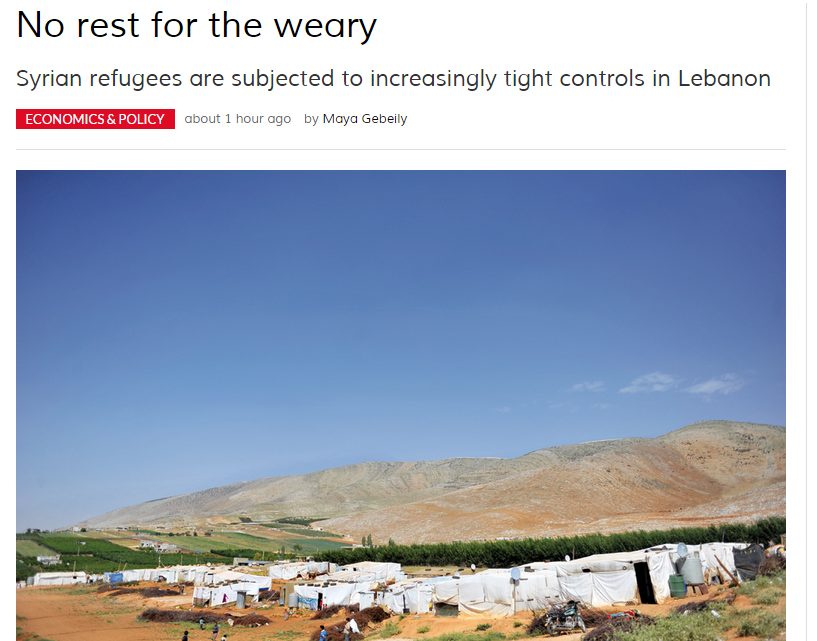
regulations [Published here on January 29, 2015] After decades of a relatively open border policy with its eastern neighbor, the beginning of 2015 saw Lebanon take unprecedented steps to monitor the entry and residency of Syrian nationals. Spearheaded by the ministries of interior and social affairs, the policies are an attempt to regulate the nearly 1.2 million Syrians already in Lebanon — as well as others seeking entry in the future.

The first of these measures came in the form of new visa requirements for Syrians and went into effect on January 5, 2015. Despite political pushback and concerns by human rights groups, Lebanese authorities insist this new policy is only the beginning.

Continue reading

Who is ISIS Leader Abu Bakr al-Baghdadi? | Newsweek

bakr[Published originally here. Omar al-Khani (Turkey) and I reported the following, edited by Newsweek Middle East Editor Janine DiGiovanni]

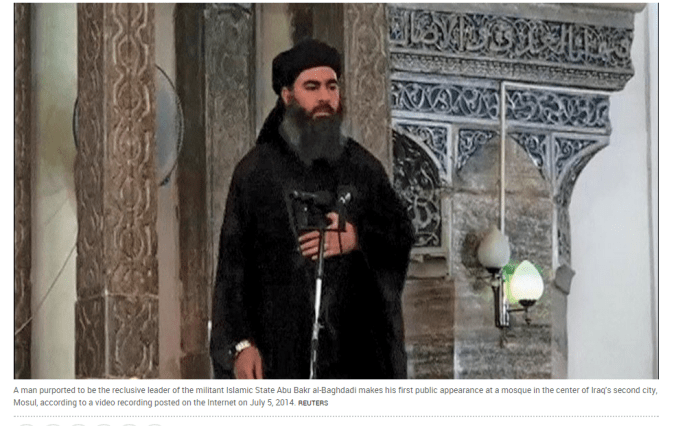
On the rare occasions when ISIS leader Abu Bakr al-Baghdadi is seen in public, his entourage is somewhere between that of a president and a mobster. “The minute he entered, the mobile coverage disappeared,” says a 29-year-old resident of Raqqa in Syria—who asked to be identified only as Abu Ali—recalling the flawless security on one occasion when al-Baghdadi entered a mosque. “Armed guards closed the area. The women were sent upstairs to the women’s section to pray. Everyone was warned not to take photos or videos. It was the most nerve-racking atmosphere.

Continue reading

Negotiations for Islamic State’s Lebanese hostages turn sour | NOW News

[Published here on August 24, 2014]

After some initial success, negotiations for the release of over 30 Lebanese hostages held by the Islamic State and Jabhat al-Nusra took a turn for the worse this weekend, when the Lebanese religious institution mediating the talks suspended their involvement. Citing challenges in securing the militants’ demands, the Muslim Scholars Committee said it would “make way for other intermediaries” to get involved. But with the militants reportedly refusing to work with anyone but the committee, the hostage negotiations may be in freefall.

Continue reading

The Struggle of Female-Led Syrian Refugee Households | VICE

From left to right: Jilan, 16, and Iman, 17, who live in the Domiz refugee camp. Image by James Haines-Young

From left to right: Jilan, 16, and Iman, 17, who live in the Domiz refugee camp. Image by James Haines-Young

[Published here August 4, 2014]

Since the beginning of the conflict more than three years ago, Syria’s death toll sits horrifyingly somewhere over 120,000. But the real number of destroyed lives is much higher: Three million refugees, scattered throughout the region, escaped the war alive. Though they survived, their homes have been demolished, their memories faded, and their dreams rendered impossible. Painstakingly, some women who turned into widows or single parents have tried to reassemble their lives, readjusting hopes and goals to fit a harsh new reality. Here is one story of a women-led household—a rare occurrence in the Middle East—inside the Domiz refugee camp in Iraq.

Continue reading

How ISIL is gaming the world’s journalists | GlobalPost

Tweets from Islamist fighters.

Tweets from Islamist fighters.

[Published here June 25, 2014]

BEIRUT, Lebanon — “Just don’t make us out as if we’re beasts and terrorists, you know? We’ve got families like you, we’ve got sisters like you, and you’ve probably got brothers like me.”

Despite his earnest tone, there aren’t many who have a brother like Abu Sumayyah.

An ethnic Kashmiri raised in the UK, Sumayyah has been living in Syria for about a year and recently pledged allegiance to the Islamic State in Iraq and the Levant (ISIL or ISIS), the powerful Al Qaeda-inspired group making gains in Syria and Iraq.

After discussing his reasons for waging jihad in Syria, Abu Sumayyah was keen to make sure I left the interview with a positive impression of ISIL. “Be a good journalist and portray the truth, not what [others] want you to portray,” he said.

Like Sumayyah, ISIL members — from the leadership down to supporters abroad — are using social media to propagate a carefully-crafted narrative about ISIL. In the process, they’ve made themselves increasingly accessible online by tweeting, following, direct-messaging — and even in some cases successfully manipulating — foreign journalists.

Continue reading