Negotiations for Islamic State’s Lebanese hostages turn sour | NOW News

[Published here on August 24, 2014]

After some initial success, negotiations for the release of over 30 Lebanese hostages held by the Islamic State and Jabhat al-Nusra took a turn for the worse this weekend, when the Lebanese religious institution mediating the talks suspended their involvement. Citing challenges in securing the militants’ demands, the Muslim Scholars Committee said it would “make way for other intermediaries” to get involved. But with the militants reportedly refusing to work with anyone but the committee, the hostage negotiations may be in freefall.

Continue reading

The Struggle of Female-Led Syrian Refugee Households | VICE

From left to right: Jilan, 16, and Iman, 17, who live in the Domiz refugee camp. Image by James Haines-Young

From left to right: Jilan, 16, and Iman, 17, who live in the Domiz refugee camp. Image by James Haines-Young

[Published here August 4, 2014]

Since the beginning of the conflict more than three years ago, Syria’s death toll sits horrifyingly somewhere over 120,000. But the real number of destroyed lives is much higher: Three million refugees, scattered throughout the region, escaped the war alive. Though they survived, their homes have been demolished, their memories faded, and their dreams rendered impossible. Painstakingly, some women who turned into widows or single parents have tried to reassemble their lives, readjusting hopes and goals to fit a harsh new reality. Here is one story of a women-led household—a rare occurrence in the Middle East—inside the Domiz refugee camp in Iraq.

Continue reading

How ISIL is gaming the world’s journalists | GlobalPost

Tweets from Islamist fighters.

Tweets from Islamist fighters.

[Published here June 25, 2014]

BEIRUT, Lebanon — “Just don’t make us out as if we’re beasts and terrorists, you know? We’ve got families like you, we’ve got sisters like you, and you’ve probably got brothers like me.”

Despite his earnest tone, there aren’t many who have a brother like Abu Sumayyah.

An ethnic Kashmiri raised in the UK, Sumayyah has been living in Syria for about a year and recently pledged allegiance to the Islamic State in Iraq and the Levant (ISIL or ISIS), the powerful Al Qaeda-inspired group making gains in Syria and Iraq.

After discussing his reasons for waging jihad in Syria, Abu Sumayyah was keen to make sure I left the interview with a positive impression of ISIL. “Be a good journalist and portray the truth, not what [others] want you to portray,” he said.

Like Sumayyah, ISIL members — from the leadership down to supporters abroad — are using social media to propagate a carefully-crafted narrative about ISIL. In the process, they’ve made themselves increasingly accessible online by tweeting, following, direct-messaging — and even in some cases successfully manipulating — foreign journalists.

Continue reading

US steps closer to arming vetted Syrian rebels | NOW News

[Published here June 2, 2014]

The American government may be getting closer to a broad train-and-equip program for vetted members of Syria’s armed opposition, according to US officials. The plan would constitute a move from a Title 50 action, run covertly by the Central Intelligence Agency and training a very limited number of rebels, to a Title 10 action run overtly by the Department of Defense that would target more scrutinized groups.

Continue reading

Syrians in Lebanon cast votes amid traffic, army violence | NOW News

[Published here May 25, 2014]

SYRIAN EMBASSY, Yarzeh — Hundreds of thousands of Syrians today headed to the Syrian embassy in Yarzeh, southeast of Beirut, to cast their vote for Syria’s next president. The Hazmieh highway was clogged with cars as early as 8 a.m.; drivers waved the Syrian flag out of cars plastered with posters of Syrian president and incumbent candidate Bashar al-Assad. But chaos at the embassy and a disorganized voting process complicated many Syrians’ attempts to vote.

Continue reading

Lebanon Stuck Between Leaky Borders and Politics | Atlantic Council

Atlantic Council

Atlantic Council

[Published here March 4, 2014]

A twenty year-old girl and a ten-year old boy were killed by Syrian government airstrikes last week. It would sound like any other day in Syria, except these strikes took place on the Lebanese side of the border, killing two Lebanese civilians and wounding several others. Porous borders are not new to Lebanon. The Lebanese and Syrian national borders have yet to be properly demarcated, and have never been fully secured. Migrant Syrian workers used to pour into Lebanon, while Lebanese looking for a quiet escape into old Damascus would flow the other way.

Continue reading

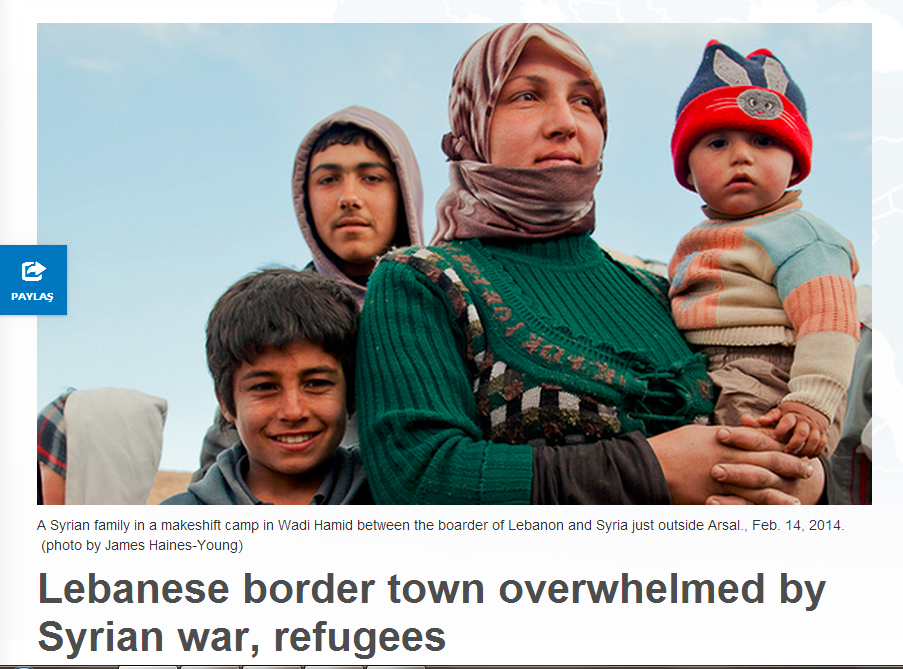
Lebanese border town overwhelmed by Syrian war, refugees | Al-Monitor

almon

[Published here February 18, 2014]

ARSAL, Lebanon — The once sleepy little town of Arsal lies in the far east of the arid Bekaa Valley, along the Lebanese-Syrian border. With its unpaved roads and half-finished stone buildings, Arsal had been a typical dusty and isolated border town, but since the beginning of the uprising in neighboring Syria, it has taken on a much larger role: It is now host to a Syrian refugee population that is more than double the size of the town’s Lebanese residents. Arsal is cracking under the pressure.

Continue reading

When they took me | NOW News

[Published here November 8, 2013]

This is a multimedia piece best experienced on the website itself, but I have also included the text below.

When the uprising hit Damascus, women were at the front lines of the demonstrations – which meant they, like their male peers, were arrested and detained by Syria’s feared security forces. Three of these women, held for their involvement in the peaceful, civil movement, spoke to NOW about their experiences. While their tales of torture are more psychological than physical, the scars remain. Almost incredulously, they call themselves “lucky,” knowing that the cases of more recently-detained Syrian women have become infinitely more gruesome and physically horrific. Though their names have been changed for safety reasons, these women’s stories remain a potent reminder of a terrifying tool still used by Assad’s security forces: detainment.

Continue reading