A Right to Exist | Al Jazeera (Magazine)

In February, I had the opportunity to work on an essay to accompany photos by an amazing photographer and friend, Felipe Jacome. He took dramatic portraits of Syrian refugee parents in Lebanon and their children, who are often at risk of becoming stateless. One of the women, Dina, told me her story.

It’s published in Al Jazeera Magazine, an elegant publication that’s only available for download on phones and tablets. Check out the little preview below, and click the link to download the magazine.

‘I’ll tell you the story of how we left Syria,’ Dina begins. ‘We got to the last Syrian checkpoint before the border point. ‘Where are you going?’ they asked me. ‘To Lebanon? You can’t go. [The border guard] forced my kids out of the car and pointed his gun at them. He cocked the gun and pointed it at my kids.’ Her voice breaks and tears roll down her cheeks, but Dina continues. ‘The driver tried to calm him down. The border guard said, ‘No, I’ll gun you down and every single one of these kids.’ We got back in the car. I looked at whatever money I had and gave it to him, begging, kissing his hands.’
http://www.aljazeera.com/aboutus/digital-magazine.html

Why I Joined ISIS: As Told to Maya Gebeily | Matter

[Published here on February 26, 2015]

In interviews I conducted with ISIS fighters and supporters, I tried to bring it back to basics: why did you join, what’s it like, where’s your family? These brief yet illuminating conversations gave me a glimpse inside their heads.

We are friendly! Unless you are an enemy, of course, I mean, just because people are in ISIS doesn’t mean that they go around on a killing rampage. They are humans, they laugh they joke, they goof with each other. The beheading, execution in public are messages to ISIS enemies, but also part of Sharia law and shows that they implement it fully.  — Abu Bakr al-Janabi

Mainly my main inspiration to come to Syria was George Bush, Tony Blair, and the presidents of the West and their foreign policy towards Islam — Egypt, Kashmir, Sinai, Yemen, Afghanistan. Guantanamo Bay. Abu Ghraib. —Abu Sumayyah

Continue reading

No rest for the weary | Executive Magazine

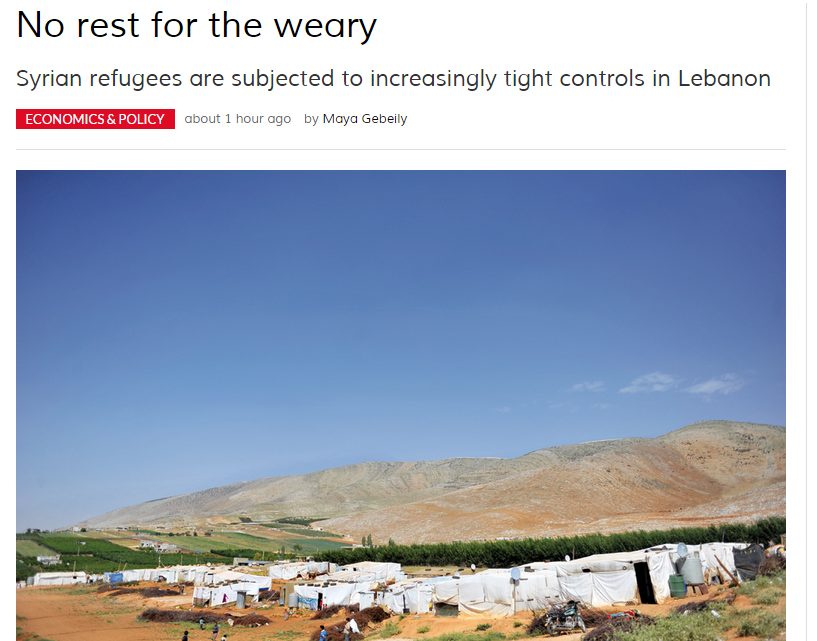
regulations [Published here on January 29, 2015] After decades of a relatively open border policy with its eastern neighbor, the beginning of 2015 saw Lebanon take unprecedented steps to monitor the entry and residency of Syrian nationals. Spearheaded by the ministries of interior and social affairs, the policies are an attempt to regulate the nearly 1.2 million Syrians already in Lebanon — as well as others seeking entry in the future.

The first of these measures came in the form of new visa requirements for Syrians and went into effect on January 5, 2015. Despite political pushback and concerns by human rights groups, Lebanese authorities insist this new policy is only the beginning.

Continue reading

Israel vs Hezbollah: Why another war is unlikely | The Independent

IndyPhoto

[Published here on January 28, 2015]

Just before noon today along Lebanon’s southern border, a small unit of Hezbollah fighters attacked an Israeli military convoy, killing two Israeli soldiers and wounding 7. Hezbollah’s attack – the most deadly for Israeli forces in nine years – sparked hours of heavy Israeli shelling throughout southern Lebanon and a naval incursion into Lebanese maritime borders.

Continue reading

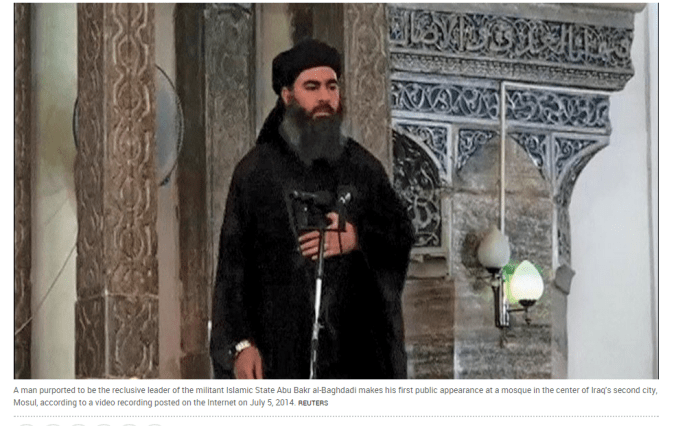
Who is ISIS Leader Abu Bakr al-Baghdadi? | Newsweek

bakr[Published originally here. Omar al-Khani (Turkey) and I reported the following, edited by Newsweek Middle East Editor Janine DiGiovanni]

On the rare occasions when ISIS leader Abu Bakr al-Baghdadi is seen in public, his entourage is somewhere between that of a president and a mobster. “The minute he entered, the mobile coverage disappeared,” says a 29-year-old resident of Raqqa in Syria—who asked to be identified only as Abu Ali—recalling the flawless security on one occasion when al-Baghdadi entered a mosque. “Armed guards closed the area. The women were sent upstairs to the women’s section to pray. Everyone was warned not to take photos or videos. It was the most nerve-racking atmosphere.

Continue reading

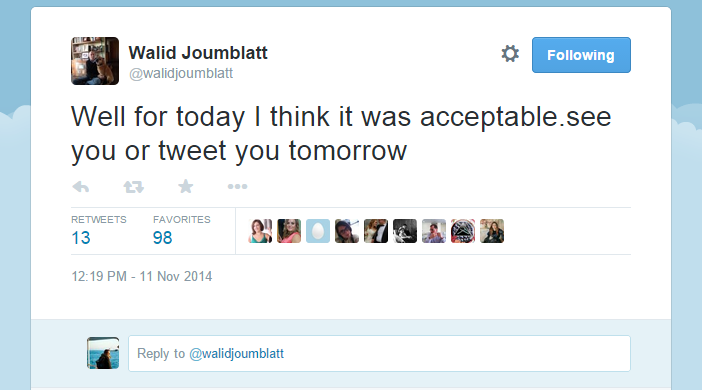
Lebanon’s Most Outspoken Politician Wants to Talk to You on Twitter | BuzzFeed

j

[Interviewed Walid Jumblatt and contributed reporting to this article, published here on November 20, 2014. Just a note, the story is a lot more fun if you read it with the embedded tweets, so check it out on the link!]

BEIRUT — Walid Joumblatt pulled out his reading glasses before opening his iPad. Oscar, his dog, had just curled himself close to Joumblatt’s feet. “He’s 10 years old now, getting old, like me,” the ex-warlord turned mainstream Lebanese politician joked.

He scrolled gingerly through a queue of Twitter notifications. “I’m trying to answer almost everybody individually,” he said. Joumblatt joined Twitter just three weeks ago and already has more than 25,000 followers, many of whom he answers directly with the same candor and wit that has helped make the 65-year-old an unlikely giant in Lebanese politics.

Continue reading

Lebanon’s Shia defiant in face of ISIL threat | Al Jazeera

Image by James Haines-Young (AJE)

[Published here November 5, 2014]

Beirut Past the barricaded checkpoints, the searching tents, and groups of men with walkie-talkies, hundreds of thousands of Shia Muslims gathered in Beirut’s southern suburbs on Tuesday, to commemorate Ashura.

On this day, Shia Muslims worldwide mourn the death of Imam Hussein, grandson of Prophet Muhammad – and in Lebanon, despite significant security threats and political deadlock, this year was no different.

Continue reading

Erbil: A Clearer Vision | Executive Magazine

[Published here on November 3, 2014]

In recent years, a hard earned record for security and stability had gained the Kurdistan region of northern Iraq a reputation as a booming business center. Headlines splashed across magazines and newspapers comparing the growth of Erbil, the Kurdish region’s capital, to Dubai’s meteoric expansion. However, the summer of 2014 challenged that idea as a new phase of turbulence gripped the whole country. The onslaught of Islamic State of Iraq and Syria (ISIS) militants, who have taken control of large swathes of the country and carved a bloody path towards Erbil and Baghdad, was a stark reminder to all that Kurdistan is not immune to trouble in the neighborhood. But like the glittering hyperbole surrounding the rise of Erbil, the doom and gloom painted since the rise of ISIS may also be overstated. The situation is far from stable, but investors, analysts and business people focusing on the area say it won’t push them out, and it certainly won’t derail Kurdish development.

Continue reading

On Violence in Tripoli | Premier Christian Radio

MENA

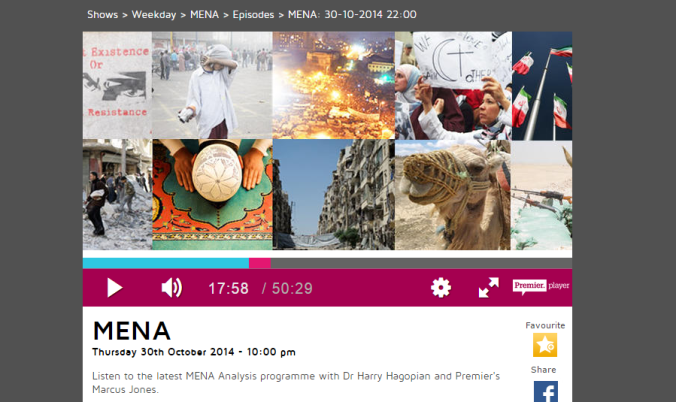
Last week, I was able to join Marcus Jones and Dr. Harry Hagopian once more for a talk on their analysis show on Premier Christian Radio. On my second appearance on their show, we discussed the recent violence in Tripoli and how Lebanon’s political deadlock has impeded an effective response to the crisis.

Click on the image above to listen to my input. I start in at about 17:50, but I encourage you to listen to the whole program. Thanks!

Water crisis: High & Dry | Executive Magazine

Debris and filth litter the camp’s water supplies

[Published originally here]

In an informal tented settlement just outside of Zahle, dozens of Syrian refugee women and girls crowd around faucets pumping water out of a large plastic tank. The “UN truck,” as they call it, has just filled their settlement’s communal tank with thousands of liters of water, and they rush to collect their share before it’s gone. After filling their buckets and bottles, they return, water sloshing, to their tents to drink, cook and clean.

Continue reading